
Celebrating the Beauty of Being Broken
Rethinking how we perceive mental illness in our society
“We’re all a little broken. That’s how the light gets in”
Ernest Hemingway
Last summer, I participated in a six-week intensive outpatient group therapy program. A specific memory that pops up for me is when our group leader, Deena, asked us what our favorite quote is. Being a Pinterest-obsessed fiend, I immediately opened my page to scour the aesthetically-pleasing images for a quote to best represent me. I stumbled upon a Hemingway quote: “We’re all a little broken. That’s how the light gets in.” My lips curved upwards. For one of the first times, I saw a collection of words illuminating the beauty of brokenness. I shared the quote with the group. Their eyes shined. The repainting of being “broken” clearly resonated with all of us.
Reframing how we acknowledge the most difficult parts of our psyche–our “brokenness”– is a crucial element to destigmatize mental illness. It seems that we are so caught up in appearing “complete” and “put together” that when life does get messy it’s hard to acknowledge when we are struggling. With this mindset, stigmatization breeds. The Mayo Clinic defines “stigma” as when someone views you in a negative way because you have a distinguishing characteristic or personal trait that’s thought to be, or actually is, a disadvantage. Our society is fixated with this concept. The Mayo Clinic dives deeper into stigmatization: https://www.mayoclinic.org/diseases-conditions/mental-illness/in-depth/mental-health/art-20046477
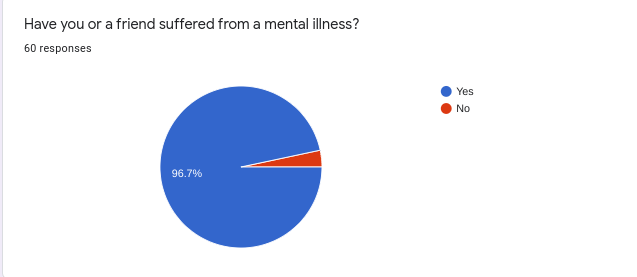
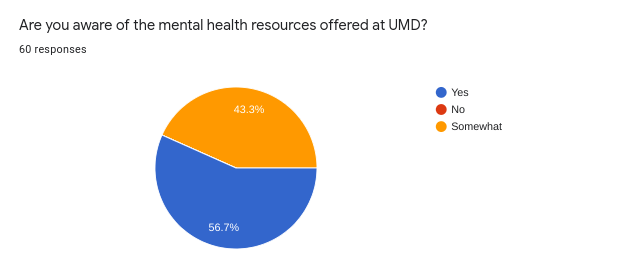
Slowly, we have begun to accept mental illness as a genuine disability. In my own personal calendar of events, I have seen steps being implemented in educational environments to give students who struggle with their mental health access to resources. As someone with a fairly extensive laundry list of mental illnesses (PTSD, GAD, Clinical Depression, and a panic disorder) I greatly appreciated the assistance. Simply listening to the needs of their students breaks down the barrier between neurotypical and mentally ill people. Speaking from personal experience, a non-judgemental perception can do wonders. As shown by the statistics on the front page of this blog, mental illness is rampant and not something to be ashamed of. So why is our society vehemently against being “broken”? As Hemingway eloquently stated, “[that’s] how the light gets in.” There is a beautiful quality to being vulnerable, jaded, and dare I say it… broken. Though we shouldn’t romanticize mental illness, the acceptance of imperfection should be prioritized.
In Japan, there is a practice called Kintsugi or ‘Golden Repair,’ that when objects are chipped, they are often repaired with gold. The flaw is perceived as a unique piece of the objects history, which adds to the beauty. How might this ideology change the understanding of mental health that pervades our society? Chanel Miller, sexual assault prevention advocate and author of the memoir Know My Name, pushed this concept into the limelight. Her book, detailing her harrowing experience with a high-profile sexual assault case, showcases a jade marble image with gold embedded into the cracks on the cover. https://heavy.com/news/2019/09/chanel-miller-know-my-name-book/ Miller brought attention to the idea that broken doesn’t equate to destroyed. In fact, it can lead to a stronger and more resilient livelihood. If we take that notion and implement it into the way to focus on mental health, perhaps the stigma can slowly become none existent.









 Isabelle's Blog